

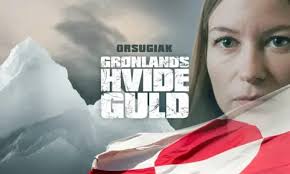
DR har faktisk en lang og varieret tradition for kolonihistoriske film, både om Grønland og om Danmark som slavenation. Men i modsætning til filmene om slavetiden, som er fortid, så lever Grønland og Danmark stadigvæk i en sårbar alliance, og DR har ikke leveret mange kritiske, kolonihistoriske dokumentarer om det. Det var måske derfor offentligheden gik så meget amok over dokumentaren “Grønlands hvide guld”, en umiddelbart set ganske solid dokumentar om danske firmaers udnyttelse af kryolitten i Grønlands undergrund. Vi mangler en fælles fortælling, vi mangler et dybere, kritisk og historisk blik på dansk og grønlandsk historie. DR gik i panik over politisk kritik, trak helt uhørt dokumentaren tilbage og står svækket tilbage.

(Artiklen er først publiceret på Copenhagen Review of Communication: https://www.copenhagen-review-of-communication.com/kolonihistoriens-sorte-pletter-gronlandsdokumentaren-og-dr-pa-glat-is/

Onsdag d. 19/2 2025 er en sort og ganske usædvanlig dag i DR’s 100 år lange historie. Her rystede DR på hånden og mistede modet til at forsvare sin kritiske selvstændighed. Det skete efter stort politisk pres udefra og også efter voldsom intern debat. Men den dag besluttede nyheds- og dokumentarafdelingen i DR, at dokumentaren Grønlands hvide guld, som blev vist første gang på DR1 9/2 skulle ”afpubliceres” – dvs. fjernes fra programfladen – på grund af den offentlige kritik den mødte. Desuden blev DR’s vellidte og kompetente chefredaktør for nyheder, Thomas Falbe, fyret med omgående virkning. Nyhedschef Sandy French forsvarede ellers først dokumentarfilmen, men vendte på en tallerken med det man efter min mening må kalde tv-historiens tyndeste argument. Hun havde aldrig set filmen og derfor pludselig fået at vide at to af filmens medvirkende, Lars Emil Johansen og Múte B. Egede, havde fået vist nogle andre grafer, end dem der var med i den endelige film. Men sagen er, at det blev de informeret om og de accepterede at deres reaktioner, blev vist. Proceduren var iflg. filmens to instruktører klart aftalt med DR, så Sandy French’s brug af dette er ude af proportioner.

Politisk pres og public service

Hele forløbet tyder på en voldsom og næsten kaotisk proces i DR’s ledelseslag. Altingets chefredaktør Jakob Nielsens kaldte det i en podcast 2. maj for en ”meget kontroversiel beslutning.” Han pegede også på, at den nye bestyrelsesformand Lars Lose måske har lænet sig lige lovlig meget ind over ledelsen i håndteringen af sagen. Selv bedyrer Lose dog i et interview med MediaWatch (Morten Bank, 28/2, 2025), at han godt nok har udtalt sig generelt om sagen, men ikke konkret været involveret i beslutningen om afpublicering. Som jeg har påvist i min bog Virkelighedens fortællinger. Den danske tv-dokumentarismes historie (2005) har der ofte stået blæst om dokumentargenren i DR’s historie. Men et så brutalt og panikagtigt indgreb, som det vi ser her, kender jeg ikke til.

For mig at se er skandalen i sagen ikke dokumentaren i sig selv, men det forhold at DR’s ledelse ikke viser modet til at forsvare kanalen som uafhængigt public service-medie. Hvis ikke DR har mere styrke til at forsvare både egne og eksterne produktioner i en stadig mere kompleks mediekultur, så står de svækket tilbage. Den endnu ikke tiltrådte nye generaldirektør, Bjarne Corydon, var også blandt de skarpe kritikere. Efter Corydons tiltrædelse og en kammeratlig samtale blev også nyhedschef Sandy French fyret – mest med henvisning til et stort taxaforbrug, men også efter en “samlet vurdering.” Samlet er der tale om en ganske dramatisk og voldsom reaktion på en enkelt dokumentar på 50 minutter.

Den samme pointe fremhæver professor Mathias Danbolt, som har forsket i kolonihistorie, i et debatindlæg i Politiken (Danbolt 21/2 2025), hvor han ydermere peger på den meget afgørende pointe, at den stærke politiske kritik af filmen har at gøre med en udbredt forestilling om, at Grønland udelukkende har været en byrde for Danmark. Grønlands hvide guld udfordrer altså i et etableret dansk narrativ, hvor også den økonomiske relation bliver central. Men som Grønlands første historiker Daniel Thorleifsson har peget på i et interview med Politiken (Nilsson, 12/2 2025) så ”må vi grave alt op, så vi kan snakke om det og komme videre. Der er et sår som skal hele, og hvis vi hver især sidder fast i en ensidig forståelse af historien, sker det ikke”. Ved at trække dokumentaren tilbage har DR medvirket til at denne debat og gaven i historien for en tid er sat i stå.

I sin halvårsrapport om DR (Termansen, 2025) bruger brugerredaktør Jesper Termansen hele fem sider på at dække sagen om Grønlands hvide guld, og han bruger mest plads på at forsvare afpubliceringen af det han kalder ”en ensidig dokumentar, der skal beskrive en påstået dansk udbytning af Grønland”. Samtidig fremhæver den danske økonom Torben M Andersen, kritiserer de to andre økonomer i filmen og nævner i øvrigt slet ikke de økonomer som efterfølgende har støttet filmen. Imidlertid er der et punkt, hvor han går imod den politiske kritik af dokumentaren og forsvarer grundprincippet i public service. Nogle politikere har antydet, at den slet ikke burde være sendt, fordi den kunne få politiske konsekvenser:

Grundlæggende er den kritik baseret på at DR bør udøver et politisk skøn over hvilke konsekvenser et program kan have politisk (…) Hvis DR skulle lade sin publiceringsplan styre af, hvilke øjeblikkelige strømninger, der er i den offentlige debat, ville det for alvor sætte spørgsmålstegn ved DR’s fundamentale uafhængighed af de politiske system. Her var kritikken af DR forfejlet (Termansen 2025, s. 15)

Her er vi inde i kernen af sagen og DR som public service og uafhængigt kritiske medie. DR skal favne bredt, men en central opgave er at tage kontroversielle og underbelyste sager op. Og det gælder i høj grad det længere kolonihistoriske forhold mellem Grønland og Danmark. Her er der mange sager at grave i, måske ikke mindst den økonomiske relation som i det lange perspektiv er ganske underbelyst. Så trods Termansens principielle forsvar mod direkte politisk kritik, må man spørge sig selv om ikke DR i denne sag har svigtet sin opgave og bøjet sig for ydre politisk pres – et pres som var betydeligt øget i kraft af Trumps trusler om at ville overtage Grønland.

Grønlands hvide guld og den kolonihistoriske økonomi

Grønlands hvide guld indgår i en meget lang DR-tradition for grønlandsfilm, en tradition baseret på både egne produktioner og overvejende eksterne produktioner. Desuden har dansk spillefilm og dokumentarfilm, via Det Danske filminstitut – fra 1972 og frem – en endnu længere tradition, både indenfor dokumentar og spillefilm. Grønlandske billeder er altså ikke ukendte for et dansk publikum, men i perioden efter 2000 og med Grønlands stigende kulturelle og politiske selvstændighed har forholdet mellem Grønland og Danmark skiftet karakter. De ideologiske og politiske spændinger er steget, og en lang række danske overgreb mod grønlændere er kommet frem i lyset – delvis via afslørende film – og samtidig har globaliseringen og storpolitiske konflikter omkring det arktiske område, ikke mindst præsident Trumps aggressive retorik, gjort danske politikere meget følsomme. Grønlands hvide guld blev altså født ind i en meget betændt politisk sammenhæng, hvor følelser og holdning i den grad kom i spil.

Men hvis man kigger tilbage på den lange DR-tradition for Grønlandsfilm, både de dokumentariske, de dramadokumentariske og de fiktive, så forekommer de massive angreb på Grønlands hvide guld helt hysterisk og ude af proportioner i forhold til dokumentarens påstande. Har Danmark i perioden fra 1700-tallet til i dag haft et kolonialistist forhold til grønlænderne? Ja mon ikke, de skulle helst med alle midler omdannes til danskere. Har danske selskaber som har arbejdet i Grønland i 1800-tallet hevet masser af penge ud af Grønland, penge som næppe primært er kommet Grønland til gode? Mon ikke! Jyllands-Postens gravergruppe har for nyligt påvist (Veirum, 2025), at de danske entreprenørfirmaer, der arbejdede i relation til Thulebasen, dvs. for amerikanerne, i perioden 1953-1984, har en samlet fortjeneste svarende til 13 milliarder i nutidskroner – vel at mærke efter at omkostninger er trukket fra.

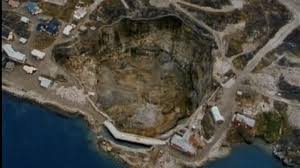
Derfor er det vel yderst relevant at en dokumentar sætter sig for at belyse både den økonomiske og den koloniale relation omkring Kryolitminen i Arsuk og forsøge at belyse om Grønland har haft nogen gavn af den udvinding som foregik fra 1853 og til omkring 1990. Har Danmark i perioden efter 1953 og frem til i dag prøvet at ændre sit forhold til Grønland fra et kolonialt forhold til et mere ligeværdigt forhold – også økonomisk? Ja det er da helt klart, men det har været en lang proces, som ikke er afsluttet endnu. Det er samtidig af afgørende betydning, at netop udvindingen af Kryolit foregik i en periode, hvor Grønland ikke have meget indflydelse over sig selv og deres eget land. Der var tale om et eksplicit kolonialt forhold, som først begyndte t ændre sig fra 1953 og frem.

Det er værd at nævne, at mens alle kastede sig over tallet 400 milliarder som helt misvisende, så har flere økonomer efterfølgende forsvaret tallet, som formodentlig ganske retvisende for omsætningen over de mere end 100 år. I Politiken har professor emeritus i empirisk økonomi fra Københavns universitet og professor emeritus i historie sammesteds, Lene Koch kaldet det pinagtigt at lytte til debatten om økonomien omkring kryolitminen, og de karakteriserer mange af de deltagende økonomers betragtninger som fejlagtige. De siger både kritisk og konstruktivt:

Ved at acceptere, at dokumentaren repræsenterer en ensidig og misvisende kritik af det danske samfunds udnyttelse af Grønlands naturressourcer, har man formodentlig ønsket at skåne den danske stat for at være en kolonimagt (…) hvorfor ikke bruge dokumentaren til at erkende den store værdi, adgangen til Grønlands ressourcer har haft for Danmark og vise vilje til i fremtiden at lytte til grønlændernes berettigede krav om ligebehandling og selvstændighed? (Juselius og Koch, 2025)

DR’s dokumentariske grønlandsprofil efter 2000

Har DR ført an i en kritisk, kolonihistorisk belysning af forholdet mellem Grønland og Danmark i et bredt historisk og nutidigt perspektiv? Hvis man kigger på perioden efter 2000 er svaret nej. Der findes nogle få kritiske, historiske dokumentarer, men det virker som om DR satser på det man kunne kalde nutidige hverdagsdokumentarer, hvilket naturligvis også er vigtigt. Men når vi kigger efter de kritiske historiske film, den slags som griber fat i og går kritisk ind i udviklingen af forholdet mellem Grønland og Danmark er der faktisk kun en central dokumentar, nemlig Historien om Grønland og Danmark (2022, 1-4) bl.a. instrueret af Claus Pilehave og Otto Rosing, de to instruktører bag Grønlands hvide guld. Selvom den kun er 3 år gammel, findes heller ikke den på DR, men den fik både gode anmeldelser og mange seere.

Serien, som er en drama-dokumentar, tager os igennem den lange historie i forholdet mellem Danmark og Grønland: fra missionæren Hans Egedes ankomst i 1721, til det gryende demokrati og hjemmestyre for Grønland i 1979. Nukaka Coster-Waldau og Lars Mikkelsen agerer som fortællere, og dermed er der også på det plan en grønlandsk-dansk alliance. I et interview på DR.dk forud for seriens premiere kommer Nukaka da også med en række markante udsagn. Hun kalder forholdet mellem Danmark og Grønland ”stærkt kompliceret”, og tilføjer ”hvis Grønland og Danmark var i et forhold på Facebook, ville det nok stå som kompliceret.” Hun taler direkte om Grønlænderne som undertrykt og om en langvarig forskelsbehandling af Grønlændere. Som konkrete eksempler nævner hun at samkvem mellem danskere og grønlænder blev forbudt i 1776, at 1.600 børn tvangsmæssigt blev sendt til Danmark for at blive fordansket, og at man uden at spørge grønlænderne begyndt at bygge betonboligblokke i Nuuk. I en meget lang periode blev Grønland styret henover hovedet på grønlænderne.

Som kritisk-historisk serie kan den formodentlig være med til at give både grønlændere og danske større indsigt i deres egen og fælles historie. Der er behov for dokumentarer som griber dybt og kritisk ned i den fælles historie. Det nytter ikke noget at vi tror det bare er historie med den undertrykkelse – den påvirker grønlænderne den dag i dag. Det skal frem i lyset og behandles. I perioden efter 2000 findes der da også få andre eksempler, f.eks. Thulebasen – kold krig og kærlighed (2018) og Grønlands forsvundne børn (1-3, 2022), som begge griber fat i sagen, hvor Danmark spiller en klart problematisk rolle i forhold til den grønlandske befolkning. Men samtidig er det lidt påfaldende at DR bruger ganske mange penge på at producere film om det eksotiske Grønland, f.eks. serien Snehvide drømme (2023, 1-6). Det er ok også at have det, men det må ikke tage overhånd i forhold til DR’s kritiske public service- forpligtigelse.

Man kan derimod bestemt rose DR for den type dokumentariske serier, som bringer os tættere på drømme og hverdagsliv hos den unge generation. Det gælder f.eks. en serie som De unge grønlændere (2018, 1-4), eller Hemmeligheder fra Nuuk (2017, 1-6) eller for den sags skylde Grønlandske boligdrømme (2017, 1-4). Her bliver grønlændere til ganske almindelige mennesker som du og jeg, og dermed kan sådan nogen udsendelser være med til at bygge bro. Men det forekommer samtidig lidt underligt, at de mere kritiske portrætter af grønlændere er eksternt produceret dokumentarer, ligesom Grønlands hvide guld. To nyere eksempler er portrætdokumentaren Twice colonized (2023), hvor vi følger en kvindelig aktivist og hendes kamp for de arktiske folk, eller Kampen om Grønland (2020) hvor vi følger en gruppe grønlandske aktivister.

 DR får testet sin public service-moral

Grønlands hvide guld blev vist i Grønland 8/2, hvor den vakte stor interesse, og i de 10 dage filmen lå tilgængelig på DR blev den set af 650.000, hvilket tyder på stor seer-interesse generelt. Men i stedet for f.eks. at arrangere en debat om programmet på tv vælger DR – som har købt sig eneret til at vise i et år og visningsret i 5 år – altså at fjerne filmen og dermed umuliggøre offentlighedens adgang til den. Der har både historisk og i nyere tid altid været politikere der har haft lyst til at angribe DR. Men det er både i den aktuelle sag og generelt vigtigt at holde fast ved armslængde-princippet mellem generaldirektør og bestyrelse, og at de programansvarlige tør stå fast, når stormen raser og politikere og andre råber højt.

Uafhængighed er et demokratisk kerneprincip i forhold til offentlige kulturinstitutioner som DR. Men de seneste årtier viser – også i andre lande som f.eks. England – at politikere har svært ved at blande sig uden om, når medierne går tæt på statslige interesseområder og omdiskuterede politiske problemstillinger. Det er tydeligt at Trumps diktatoriske stunts i forhold til Grønland og det nært forestående grønlandske valg spiller ind i kritikken af programmet. F.eks. antyder Magnus Barsøe (S-suppleant til EU-parlamentet) i et indlæg i Information (13/2 2025) at dokumentaren ligefrem kan have ødelagt rigsfællesskabets fremtid.

Der blev i debatten ofte talt med grotesk store ord, ligesom det også ofte er sket for en af de europæiske public service-giganter, BBC. I den meget voldsomme offentlige og politiske kritik af BBC’s nylige Gaza-dokumentar Gaza: How to Survive a Warzone, synes der at være en klar parallel til DR-sagen. Efter stærk kritik valgte BBC at trække dokumentaren på grund af en enkelt detalje (The Guardian, 14/7 2025). Det vidste sig senere at der ikke var noget at komme efter OFCOM frikendte dokumentaren. Forestillingen om enkelte programmers magt – det som i medieteorien kaldes ”the magic bullet theory – er åbenbart meget stor blandt politikere, mens tilliden til at seere godt kan tænke selv er ret lille.

Når man ser tilbage på de mange spaltemeter af kritik af DR og dokumentaren i både de trykte, de elektroniske og de sociale medier, så er det som om alle kun forholder sig til et enkelt tal – 400 milliarder – som angiveligt er Kryolitminens omsætning fra 1854 og frem (omregnet til nutidskroner), som er det ene spor film kører i. Men som dokumentar er filmen meget mere kompleks. Der er mange flere aspekter i forholdet mellem Grønland og Danmark på færde. Efter brat at have fjernet dokumentaren, fordi DR med den nye Generaldirektør, Bjarne Corydons bramfri ord ”havde skidt i nælderne” (Mediawatch, 4/8 -25) har man nu taget konsulentbureauernes dyre og gyldne værktøj frem, og man vil med næb og klør forsvare troværdigheden og det faktabaserede. Det lyder enten som om man vil genopfinde den dybe tallerken, eller også at man vil lægge programpolitikken i meget stramme tøjler.

I den indre debat på DR taler bestyrelsesformand Lars Lose samme sprog, og bemærkelsesværdigt nok retter man nu særligt det kritiske blik mod de eksternt producerede dokumentarer, og antyder samtidig at nyhedstrykket for den slags skal gøres mindre (Bank, Mediawatch, 25/8 -25). Oversat til mere forståeligt dansk, er det altså nu bare fordi dokumentaren var ekstern, og fordi man gjorde for meget reklame for den, at det gik galt. DR løber uskønt og stærkt baglæns, og de afleder opmærksomheden fra at både denne eksterne dokumentarfilm og DR’s egne er igennem en meget stærk kvalitets- og kontrolproces. Ledelsen danser en hårfin dans på kanten af en bestyrelses overordnede programansvar og indblanding i enkeltprogrammer.

En dokumentar som Grønlands hvide guld kræver typisk en ganske langvarig og omfattende research- og produktionsproces, i dette tilfælde mere end tre år. Den fik produktionsstøtte gennem DFI (v. dokumentar-konsulent Frank Piasecki Poulsen) via Norddok II, og den fik endvidere støtte fra Den Vestdanske Filmpulje og den Grønlandske Kunstfond og DR. Hovedproducenten af filmen var Wintertales (Direktør Michael Bévort) med Mr. Film og Human Film som co-producenter. Den er altså gået glat gennem et af de mest strenge og selektive filmstøtte-systemer vi har. Her smider man ikke penge efter dokumentarfilm som ikke holder standarden. Filmen er instrueret af Otto Rosing og Claus Pilehave, som også har skrevet manuskriptet. Selvom de bedste kan fejle, så er der grund til at pege på at Otto Rosing har en lang produktion bag sig af film om Grønland, bl.a. den første helt grønlandsk producerede spillefilm, Nuumioq (2002), udtaget til Sundance Festivalen og Grønlands første Oscar kandidat. Både Rosing og Pilehave har endvidere været ansat som freelancere i DR. bl.a. på DR’s drama-dokumentar Historien om Danmark og Grønland. Vi har altså at gøre med to erfarne instruktører, som både kender filmproduktion uden for DR og indenfor DR.

Jeg interviewede tidligere i år Otto Rosing og opfølgende også Claus Pilehave og producenten Michael Bévort om tilblivelsen af Grønlands hvide guld og især det der skete, da DR købte rettighederne til at vise filmen. Jeg spurgte til processen med DR inden premieren. De sagde at der havde været intense diskussioner med både DR og økonomer om grafer og tal, og om den uenighed mellem økonomer, som filmen også præsenterer. Men der var fuld enighed med DR om den færdige film. DR var klar over at filmen kunne møde kritik og skabe debat, men ingen troede at det kunne gå som det gjorde.

It’s not just the economy – stupid!

Men trods den markante kritik af tallet 400 milliarder i filmen efter dens premiere, så er sagen vel den, at dette tal i sig selv burde være ret ukontroversielt og heller ikke afvises af de tre økonomer i filmen – herunder Torben M. Andersen – som synes at være den eneste kritikerne fokuserer på. Han afviser ikke tallet 400 milliarder i filmen, som et omsætningstal. Det tal er givetvis Kryolitselskabets samlede omsætning i den lidt over 100-årige periode. Men det mere komplicerede er, hvordan man skal fortolke det. I filmen vælger man at følge hvad de penge blev brugt til, og det var i overvejende grad i Danmark. Men den utrolige økonomifiksering i modtagelsen af filmen kommer helt til at skygge for de politiske, sociale og menneskelige dimensioner, som filmen afdækker ved siden af tallene.

For nu at bringe to anerkendte økonomiske eksperter i clinch med hinanden, kan man inddrage den allerede omtalte Katarina Juselius, professor emeritus i økonomi, Københavns Universitet, som i Information (18/5 2025) har en lang og meget nuanceret gennemgang af forholdet mellem Danmark, Grønland og Kryolitminen. Hun peger på at selvom regnestykket fra omsætningen på 400 milliarder ned til beløbet minus omkostninger er vanskeligt over så lang en periode, så kan ”man ikke afvise, at Danmark har haft betydelige fordele af kryolitminedriften, og at det ville være godt for både Danmark og Grønland åbent at erkende det.” Hun peger også på, at det, som dokumentaren også viser, ikke bare er selve indtægten ved minedriften, men også de afledte effekter primært i Danmark i form at indkomstskatter, varekøb og ikke mindst at indtægten fra minen var med til at skabe nye virksomheder i Danmark og også finansiere bl.a. Marmorkirken.

I filmen følges det økonomiske spor af Marie-Louise Skov Jensen, både når det drejer sig om Kryolitminen og når det drejer sig om Danmarks bidrag til Grønland. Undervejs interviewer hun tre økonomer og den tidligere direktør for Kryolitselskabet (1979-1990), Peter Schmidt Hansen medvirker. Han siger bl.a. at alle dem som var involveret i minen blev meget rige og at pengene primært flød tilbage til Danmark, hvor det fik stor økonomisk betydning. Det belyses både med gamle dokumenter og historiske filmoptagelser og interviews med nogle af efterkommerne, hvordan pengene flød ind i Danmark

Filmen følger også de økonomiske og politiske forandringer i forholdet mellem Danmark og Grønland fra det tidspunkt hvor Staten efter Staunings ønske blev medejer af Kryolitselskabet og efter 1945, hvor Hedtoft påbegyndte den forandring i den danske politik i forhold til Grønland, som fra 1953 førte til at Grønland blev en del af Danmark og også fra 1979 bevægede sig mod øget suverænitet.  Også når vi ser på de økonomisk-politiske analyser i filmen er der altså et meget stærkt fokus på historisk og økonomisk at beskrive forholdet mellem Danmark og Grønland i et bredt, kolonihistorisk perspektiv. Ca. 30 minutter inde i filmen fremlægges en graf over Danmarks økonomiske bidrag til Grønland: en markant udvikling fra kun 59 millioner i 1953 til stigende til over 1 milliard om året i 1971. Den økonomiske udvikling i Danmarks bidrag til Grønland dokumenteres altså klart. Det påpeges at Danmark efterhånden og i meget højere grad forsøger både at gøre Grønlænderne mere selvstændige, og modernisere og opbygge et grønlandsk velfærdssamfund.

Men filmen er som sagt langtfra bare om økonomi, for i filmens andet spor, som følges af den dansk-grønlandske Naja D. Graugaard, går vi ind i grønlændernes egen historie og opfattelse af forholdet mellem Grønland og Danmark. Her krydses to grundgenrer i dokumentarismen: den menneskelige hverdagshistorie, forholdet mellem danskernes og grønlændernes opfattelse af hinanden og den mere politisk-økonomiske historie. Det er Naja der med sine familiemæssige forbindelser kan gå ind og tale med indbyggerne i Arsuk, den by som lå ved Kryolitminen. Det er hende, der kan finde dokumenter og billeder frem, og opspore både danske og grønlandske personer, som personligt og familiehistorisk kan fortælle om hvad minen betød for et lille grønlandsk samfund. Vidner omfatter f.eks. arkitekt Peter Barfoed, som voksede op der (1952-65), Mads Fægteborg som er forfatter til flere bøger om Grønland, Daniel Thorleifsen, direktør for Grønlands Nationalmuseum og Arkiv og også Tom Høyem, den sidste grønlandsminister (1982-87), som meget markant udtaler, at det i hans tid var på tide at forandre alle de forældede kolonihistoriske forestillinger i Danmark.

I virkeligheden bygger filmen på et meget dybtgående forsøg på at grave sig ned i den kolonihistoriske fortid før grundloven i 1953 påbegyndte en ganske langvarig forandring i forholdet mellem Danmark og Grønland. Kryolitminen og dens senere udvikling til Danish Fancy Food, får Tom Høyem til at udbryde: ”hvordan kan det være den danske stats opgave at lave småkager!” Forholdet mellem Danmarks opfattelse af hvad vi har gjort for Grønland mødes i forskellige former af Grønlændernes egen opfattelse. Det ser man bl.a. i filmens start, hvor danske og grønlandske politikere får lov at sætte dagsordenen. Anders Fogh Rasmussen siger på sin sædvanlige bombastiske facon at ”Danmark har på ingen måde undertrykt eller udsuget det grønlandske samfund. Tværtimod har Danmark meget generøst ydet kontant støtte til at udvikle Grønland til i dag at være et moderne velfærdssamfund.” Det udsagn støttes af Hans Hedtoft, som siger at ”den politik som Danmark har ført gennem 175 år har været præget af et ideelt ønske om at hjælpe Grønlænderne”. Imod dette siger Lars Emil Johansen at ”man prøver at tegne et billede af et hjælpeløst Grønland, som kun kan reddes af den store generøse land Danmark.”

Få arbejdstøjet på DR – den kritiske Grønlandshistorie venter

Man kan med rette spørge sig selv, hvordan DR kan reagere så dramatisk på kritikken af en dokumentar, som forsøger at give os en ganske omfattende indsigt i ikke bare Kryolitminens historie og økonomi men også går tæt på det historiske forhold mellem danskere og grønlændere. Alt skal jo ikke gå op i økonomi, men også på det punkt går dokumentaren foran. Men hvorfor har ikke DR’s graverjournalister for længst grebet fat i både den historiske og moderne grønlandsøkonomi? I stedet for at svigte sine public service-idealer og smide en dokumentar ud med badevandet, så ville det klæde DR at fortsætte og udvide arbejdet med forholdet mellem Danmark og Grønland – herunder både de menneskelige og økonomiske aspekter af historisk og nyere kolonipolitik. Der er masser af sager at tage fat i.

Hvis man kigger på udviklingen i historierne om Grønland og Danmark efter 2000 har DR ganske vist gjort noget, men det er faktisk eksternt producerede dokumentarer, der viser vejen, og det er også bemærkelsesværdigt, at grønlænderne selv er ved at få etableret en mangfoldig filmkultur. Det er som grønlandseksperten Kirsten Thisted har sagt det i en artikel i Politiken:

Siden indførelsen af det grønlandske selvstyre i 2009 er der ellers sket en enorm udvikling i den måde, hvorpå Grønland og grønlændere repræsenteres i danske medier. Ikke mindst er interessen for at lytte til grønlænderne og få deres egne historier nærmest eksploderet i de senere år (Thisted, 28/2 2025).

Afpubliceringen af Grønlands hvide guld er forhåbentlig kun et midlertidigt tilbageslag for denne udvikling, men DR har svigtet stort. For at fremstå med den faktabaserede troværdighed, som den nye generaldirektør taler så meget om, så bør DR vise modet til at fortsætte den kritisk-historisk afdækning af forholdet mellem Danmark og Grønland. Den historie er langtfra belyst nok på film og tv.

Referencer

Bank, Morten (2025). Åbenlyst at Grønlandsdokumentar efterlader DR mere sårbar. (Interview med Bestyrelsesformand Lars Lose, Mediawatch, 28/2 2025)

Barsøe, Magnus (2025). Har DR’s fejl lige ødelagt rigsfællesskabets fremtid? (Information, 13/2, 2025)

Danbolt, Mathias (2025). DR’s største svigt er, at man har afpubliceret kryolitdokumentaren. (Politiken, 21/2, 2025)

Herman, Jesper (2025). Lytternes og seernes redaktør rapport. 1. halvår 2025, DR)

Juselius, Katarina og Lene Koch (2025): Det har været pinagtigt at lytte til dækningen af det økonomiske spørgsmål i kryolitdokumentaren. (Politiken, 4/3 2025)

Juselius, Katarina (2025). Mine økonomikollegers fordømmelse af kryolitdokumentaren er for ensidig. (Informations kronik, 18/5, 2025)

Nielsen, Jakob (2025). Altingets podcast #dkpol, 2/5 2025)

Nilsson, Kirsten (2025). Han blev Grønlands første historiker. Nu vil han vise os et sår, som skal heles. (Interview med Daniel Thorleifsson, Politiken 12/2, 2025)

Ritzau (2025). DR-general Corydon vil slås med næb og kløer for vores troværdighed. (Mediawatch, 4/8 2025).

Savage, Michael (2025). Tim Davie admits significant failing by BBC over Gaza documentary. (The Guardian, 14/7 2025)

Thisted, Kirsten (2025). Debatten om Grønlands hvide guld er voldsom, fordi den piller ved fortællingen om hvem vi er. (Politiken, 28/2, 2025)

Vejrum, Thomas M. (2025): Danske entreprenørselskaber scorede kassen på amerikanske baser i Grønland. (SERMITSIAQ, 28/8, 2025)


Abstract

This article analyses the way the Afghan war has been dealt with in Danish documentaries, fictional films and television programmes. The Afghan war is a landmark in Danish media and public debate. It was the first war in which Danish forces were in direct combat on foreign ground. This raised a new agenda where national and global dimensions of war interact on film. Susanne Bier’s Brothers (2004) was the first film to address this theme, followed by Christoffer Guldbrandsen’s political documentary The Secret War (2006). Janus Metz’s documentary film Armadillo (2010) and Tobias Lindholm’s very realistic fictional film The War (2015) both include the perspective of the soldier, the home front and the civilians. Two other documentaries, Eva Mulvad’s Enemies of Happiness (2006) and Nagieb Khaja’s My Afghanistan. Life in the Forbidden Zone (2012), on the other hand go deep into everyday life in Afghanistan. Together these films ask how we can deal with war and realities in a global world and how films can make us better understand global others.

Keywords: the Danish war film, political documentary, war documentary, Afghanistan, cosmopolitan ‘Others’

Introduction

In all cases of war, journalism, film, and documentaries are important because media can take us directly into the battlefield and enable us a look behind the frontlines and into everyday life. In both documentaries and fiction films we can witness the lives of civilians and communities suffering because of the war. War films can show us the true face of combat, they can create a space for public debate, and on a deeper level they can also give us emotional identification with global others. They can make us realise that despite cultural and religious differences humans around the world have a lot in common (Bondebjerg 2014 and 2020). The Danish Afghanistan films try to do just that: on the one hand they follow Danish soldiers in combat, but they also try to tell the story of the Afghans and their everyday life, the story of a nation caught between an internal and an external war.

Films about wars in modern mediated societies are on the one hand part of a national narrative, what Benedict Anderson called imagined national communities (Anderson 1983). Media stories, journalism and fiction films all relate to and reflect the national culture they are imbedded in. However, as sociologists like Arjun Appadurai (1996), Ulrich Beck (2006) and Gerard Delanty (2009) have been arguing, globalisation is not just about dominance and very heavy social differences on a global level. We can also talk about forms of increased intercultural mediation (Bondebjerg et al. 2017a: 23ff) by means of images and narratives which at least potentially establish new links between national communities around the globe. New channels of mediated globalisation have been created, and the boundaries between national communities and the life of others in different communities may challenge our perception of self and other, us and them. Danish war documentaries in many cases seem to combine a critical look at the national war efforts with stories meant to break with a national mono-narrative. They take a critical look at the notion of us and them.

The films dealt with in this article are both fictional and documentary, but despite their generic diversity, they all raise one key question: what is the relationship between our lives as Danes in a fairly stable democracy and welfare state, and those out there with whom we are fighting a war? Will the war make a difference out there, and do we really understand those people and societies we fight against and for? Can films further a deeper understanding of global others who also arrive at our national doorstep as refugees and migrants? How can films best help us understand the realities of war and global inequalities, and thus perhaps realise that European democracies also depend on global politics? These are the central questions raised in the following, therefore the article deals with the concept of cosmopolitan narratives. These are narratives of documentary or fictional nature that deal with ‘us’ and ‘them’, with the relation between a national and a more global perspective on reality, in this case the Afghan war seen from a Danish and an Afghan perspective. The Danish films discussed here all deal with wider questions about how global understanding and cooperation can be improved.

The films analysed in the following represent the fundamental Danish narratives of the Afghan war, and despite thematic differences they all address corresponding issues. Susanne Bier’s film Brothers was the first fiction film to take up the subject of the Afghan war, and it shows what the war out there actually does to soldiers, and also how it affects the home front. This theme is also central to Janus Metz’ film Armadillo, which tells not only about soldiers at war and at home, but also about the combat zone and the Afghan home front, conveying a strong existential message. The same theme prevails in Tobias Lindholm’s film The War, which foregrounds the problem of war crimes. Unlike Bier’s film, The War is based on a military court narrative. In many ways the political and moral legality of the Afghan war is at stake in Lindholm’s film, the aspect also central to Christoffer Guldbrandsens very critical The Secret War, with its indictment of the Danish politicians and the military high command responsible for the country’s involvement in the war. This is also the case in the latest documentary from Nagieb Khaja, Bedraget i Helmand (Deceived in Helmand, 2023), which deals with corrupt Afghans that the Danish military worked with, well aware of their inclinations. This narrative of dealing with the locals in Afghanistan also includes an important dimension of how poor our understanding of the reality in Afghanistan is. Films like Nagieb Khaja’s My Afghanistan: Life in the Forbidden Zone and Eva Mulvad’s Enemies of Happiness are important counter-narratives to the other films analysed. They try to tell the story of ordinary Afghans, how they are affected by the war and also how they dream of and fight for a different Afghanistan.

Mapping Out the Context

Denmark became a member of NATO in 1949, but did not participate in any military combat operations as a NATO-member until Danish forces joined the war in Afghanistan led by the USA in the wake of the 9/11 2001 terrorist attacks. Danish soldiers had until then only taken part in UN peace keeping activities, for example during the civil war in Yugoslavia in the 1990s. The war on Afghanistan was backed by UN resolution 1373, and as a consequence a large majority in the Danish parliament supported the war. However, the public opinion was more divided: those voting for the conservative-liberal bloc, then in power, were for the Danish military involvement, while those supporting the more left-oriented parties were against it. However, Denmark pursued its new policy of active military presence also by taking part in the invasion of Iraq in March 2003. The argument for the Iraq invasion was based on the now well-documented falsehoods by the US government about Iraqi weapons of mass destruction. The Iraq war was not backed by the UN or NATO as a whole, therefore the Danish parliament’s decision was much more controversial, and public opinion was split. As the two wars continued for years, they eventually caused both a widespread public debate and ultimately a division in the Danish society.

In 2006, the Danish documentary film maker Christoffer Guldbrandsen, a specialist in critical, political documentaries, made the first critical documentary about Danish military operations in Afghanistan, Den hemmelige krig (The Secret War). The film was the first overtly political Afghan film made in Denmark in the sense that it directly questioned the aims of the war and highlighted the close bond between the Danish prime minister Anders Fogh Rasmussen and the American president George W. Bush. It also strongly attacked the military system for covering up an incident in which Danish soldiers handed over prisoners to the Americans, knowing they would violate the Geneva Convention. The main perspective in the film contrasts the official reason for the war – to install democracy and human rights in Afghanistan – and the violation of those same human rights, for instance when taking prisoners or in relation to ordinary Afghans. The film also questions Denmark’s new, more aggressive role in global politics. In a 2008 interview with the author of the present article, Guldbrandsen said that the film could be seen as a wake-up call and shock for the nation’s self-image: “The reaction against the film was not about the film’s form and aesthetics, it came because the film challenges our national mentality as a small, peaceloving nation” (Guldbransen 2008).

Guldbrandsen’s film raises questions about the political and military strategy behind the war against Afghanistan, the attitude to the civil population hit by the war, and the treatment of Afghan prisoners of war. Its authors faced serious problems during the production, having been denied access to most official documents about the war and in particular about war prisoners. When the Danish troops took prisoners, they handed them over to the Americans, although the journalists had already documented cases of the violation of the Geneva Convention in American prison facilities. The film was accused of promoting a partisan agenda and abusing journalistic and documentary standards, which was a reflection of a heated public debate on Danish media. However, already in 2006 (see Bondebjerg 2014 p. 98-99) an independent evaluation of the film concluded that it lived up to the high standards for productions of its kind.

Films and documentaries about war, including the wars in Afghanistan, Iraq, and the civil war in Yugoslavia, have had significantly more presence across Danish film and television since 2000. This increased presence has widely influenced Danish public debate and politics. The agenda on war is closely linked to globalisation and the refugee crisis in the European Union. The war is linked to our national policy towards global others, those whom we face in war as well as in our everyday life in a multi-ethnic Denmark (Bondebjerg 2017). Wars can of course be necessary, but the question is if the war in Afghanistan was really worth the losses on both sides? Especially now, after all western forces have withdrawn, and we are looking at a country falling apart because of poverty and the authoritarian religious rule violating basic human rights, especially women’s. The question of ‘us’ and ‘them’ is more important now than before we went to war. We need more cosmopolitan and critical films that can contribute to a deeper global understanding.

Again, this debate and more cosmopolitan forms of dialogue on a broader, global scale are not just a Danish phenomenon, as exemplified by BBC Panorama’s two programmes in connection with the Afghan war and 9/11. In the Panorama debate programme Clash of Cultures (October 2001) the discussion involves the BBC and Al Jazeera, connecting audiences and experts in New York, Islamabad and London. Panorama continued with Koran and Country, focused on Muslims living in the UK in order to hear different voices in those communities on the war in Afghanistan. This clearly transnational and cosmopolitan form of dialogue is an analogous attempt to create cosmopolitan understanding, that we find in the Danish Afghanistan films.

Globalisation and the Loss of National Innocence

Christoffer Guldbrandsen’s classical investigative documentary about the Danish involvement in the war in Afghanistan was not in fact the first Danish film dealing with this subject. Susanne Bier’s feature film Brødre (Brothers, 2004, also made in a US version) was a major success in Danish cinemas, and subsequently on television and streaming services. It combines a storyline set in Afghanistan with a family drama in Denmark. Like her similar films Efter Bryllupet (After the Wedding, 2006) and her Oscar-winning Hævnen (In a Better World, 2010), it introduces a new kind of global drama in Danish film, clearly aiming to bridge the global and the local, making the two realities with their imaginaries reflect each other. Her films illustrate an increasingly connected world and global commonalities despite cultural and social differences. In an interview in the Danish newspaper Berlingske Tidende (Schelin 2004) Susanne Bier states that modern cinema has to deal more directly with global problems, because they affect our everyday life and social and political reality.

In Brothers, the strong, rational brother Michael (Ulrich Thomsen) chooses to enlist as a soldier in Afghanistan, leaving behind his wife Sarah (Connie Nielsen), children, and his quite problematic and foolish brother Jannik (Nikolaj Lie Kaas). Michael wants to serve his country in a faraway place for idealistic reasons. However, he is taken prisoner, tortured, and systematically broken as a human being. The scenes in Afghanistan demonstrate the darkest sides of warfare, challenging Michael’s human values. For example, he is forced to take part in the torture of a fellow prisoner, and he himself experiences mock executions. But worst of all, at gunpoint he is told to kill his Danish fellow prisoner, a friend from home, or else they will both be shot. He kills him, brutally, with an iron bar. Sometime later he is liberated by British soldiers, but he lies about what happened to his fellow prisoner both to the British and the Danish military. Perhaps worst of all, he lies to the widow, who is still hoping her husband is alive.

He has been imprisoned for so long that his family considers him dead, and when he comes home, completely broken both mentally and physically, the fact that his wife and little brother have fallen in love and moved in together makes him almost destroy his own family. In a very dramatic scene, he threatens his wife and children, smashes the kitchen furniture, and when finally confronted by the police, he ends up in a similar situation as that in Afghanistan. This time, however, his brother helps calm him down and he is jailed. In the last scene of the film, Michael’s wife forces him to tell the truth about his killing of the other Danish prisoner in Afghanistan. As Belinda Smaill (2019, p. 217) has noted in her analysis of Bier’s global trilogy as a “transnational form of cinema,” Bier connects familial power structures directly to social structures that have global, geopolitical dimensions and perspectives. The film demonstrates that what we do to global others can easily come back and haunt us at home.

Danes at War Close up: Armadillo and The War

Because until recently military issues were never particularly high on the national agenda, Danish film has not focused on war except for a large number of films dealing with the German occupation and the Danish resistance movement during the Second World War. The new phase of globalisation after 2000 gradually changed that, and the wars in Afghanistan, Iraq, Syria and finally the Russian war against Ukraine clearly put war almost at the top of the political and public debate. War has become a big theme in feature films, documentaries and television series. As a consequence, the critical investigation of war in a national and global context, initiated by the work of Susanne Bier and Christoffer Guldbrandsen, has expanded significantly.

A clear indication of the prominence of war in Danish film is that the very popular television series Borgen in its second season had an episode called 89.000 Kids, fully dedicated to the Afghan war. The episode opens with the prime minister Birgitte Nyborg (Sidse Babett Knudsen) visiting Danish soldiers in Afghanistan. During her visit, the camp comes under attack and some soldiers get killed in a roadside bombing. This incident sparks a heated debate in the media and parliament. The prime minister is caught between the anti-war opposition, those in favour of a stronger military presence and the NGO’s advocating a bigger support for Afghan citizens – in this case the children saved by humanitarian organizations (hence the title of the episode). The episode also portrays the prime minister’s encounter with the father of one of the dead soldiers, who is very angry and in deep grief. All in all, it offers a condensed narrative of some of the most central themes of Danish films about the war in Afghanistan.

It is, however, Janus Metz’ documentary Armadillo (2010) and Tobias Lindholm’s feature film The War (2015) that each in its way bring the war stronger into the national sphere. Metz’s observational documentary follows a group of Danish soldiers at home, at war, and back home. Lindholm’s work is fictional but it conveys a strong documentary sensibility. Both films take us deep into the war and the conditions of combat with the enemy not always easy to identify, and we mostly see the war from the perspective of the soldiers. And both pay attention to the Afghan reality, which the soldiers find difficult to understand. In Armadillo there are scenes when the Danish soldiers meet the locals and try to communicate and cooperate with them. Both films show the brutality of war very directly. In The War there is an additional appealing theme that concerns the ethics of war and the difficulty of always doing the right thing in the complicated reality of combat where decisions must be made within seconds. This has to do with the courtroom subplot as the main character, battalion leader Claus Petersen (Pilou Asbæk), is accused of killing civilians during a very complicated action. Even though he is found not guilty, the trial leaves the viewer with an impression of insoluble wartime dilemmas: soldiers are expected to act in morally appropriate ways, but they often end up doing something evil. The film employs an almost clinical realism in its depiction of the blurred reality of war and the morally ambiguous aspects on both sides

Armadillo was the first Danish film to explore in detail the realities of the Afghan war. Metz had to fight with the military to approach the soldiers and the Afghan civilians as closely as possible. There is no authoritative voice in the film and no guidance as to what we see. On the contrary, the strength of the film comes from its insistence that we as viewers are confronted directly with the wartime reality as it unfolds in the director’s edited version of it. Armadillo was mostly shot on by a professional crew with professional cameras, but some of the most dramatic combat scenes were also filmed from the soldiers’ point of view using footage from helmet cameras. Metz also uses aerial shots from airplanes and night vision images. This mixture of filming techniques, from very close up, from a professional distance and from high altitude indicates the director’s intention of letting the audience see the war from many perspectives and get a fuller picture of modern war. In an interview with the author of this article in 2013, Metz said:

I felt it was important to make a film that provided a really detailed picture of the reality of war, and of its consequences for the soldiers, and for the civilians for whose sake we allegedly are involved in the fight in the first place. However, what I was really interested in was raising some big existential questions about our civilization and our way of being human in the context of contemporary global realities. (Metz interviewed by the author in Hjort et.al 2013, p. 257)


Metz also emphasizes that the aim of the film was to make something different from embedded war journalism. In his opinion, storytellers do a different job than journalists, and therefore his aim was to create a more character-driven narrative and to facilitate a more emotional form of identification. The idea was not to abandon the realism and factual precision of the documentary form, but to use the narrative and the characters in such a way as to enable a deeper understanding of war. The film from the start immerses itself in the psychology of a group of professional Danish soldiers who volunteered to go to one of the most dangerous places in Afghanistan, Helmand province. Of course they are committed to fighting because they feel they are doing the right thing and making a difference for their country. The film reminds us that what matters during wartime is community, solidarity and mutual care. What is striking at the end of the film is that, after having been through a tough time and witnessing the deaths of comrades, the majority of the soldiers plan to return to Afghanistan for another tour.

Armadillo focuses on two characters: Daniel, an action man drawn to what Metz calls the “dangerous and dark side of the war”; and Mads, a more timid and reluctant type of soldier, who seems to be there out of duty, but does not conceal his scepticism about the military and the whole mission (Metz 2014 p. 259). The film does of course also give us a bigger picture of how military actions are planned as well as insights into specific situations, such as debriefings after heavy  combat. A close look at two different types of soldiers and personalities, however, allows the film to establish an emotional and psychological space of war, combining universal and subjective dimensions of war. Still, the character-driven narrative conveys a larger political – national and global – message:


It’s also a mental journey, on a national level, through our self-conceptions as a democratic nation. Why is it that we’re now teaming up with the strong and powerful? Why are we building military bases in remote parts of the world in order to protect ourselves and to intervene in a quite different culture? The film is also about what this kind of active militarism does to our self-understandings as Danes, and, in a more extended sense, to the relationship between the West and other parts of the world. It’s a film about the landscapes of globalization as these are reflected in the landscape of war. It’s a film about what might be problematic about our new militant “humanitarianism”, about the idea of a tough kind of tit for tat in a global game (Metz interviewed by author in Hjort et.al 2014 p. 258)


By shifting between different social spaces (the home front, combat zones, camp routines and ordinary Afghan life), Armadillo marks out national, global and local dimensions of war, which define the relation between us and the global others – the peoples we fight with and at the same time claim to help. The combat scenes in Armadillo are excessively brutal and realistic against the backdrop of Danish war films, but their effect is counterbalanced by portrayals of the soldiers’ everyday functioning in the camp and their interactions with the Afghans. The film establishes a kind of mediated cultural encounter between ordinary Afghans caught in the war and the viewers of the film, be they Danish or from some other country. We directly experience being with people from a culture very different from ours, but also in some ways similar to us: they have families and they try to live normal lives.

Very direct and realistic combat scenes are also characteristic of Lindholm’s The War. The film opens with a scene that shows a group of Danish soldiers on reconnaissance, when a roadside bomb explodes killing one of them. We see this from two concomitant perspectives: the soldiers’ direct perspective and the commanding officer’s perspective in the camp – through sound and electronic visual contact. During the debriefing that follows the soldiers express their frustration as they doubt the strategy behind their mission. Following that, the battalion leader tries to calm them down: “Do any of you doubt why we are here? We are here to secure the Afghan population a safer and better life and make it possible for them to rebuild their country.” He adds that right now the foreign armies are finally getting the civilians on their side. This turns out to be an illusion, and the Danish soldiers plunge into a war that cannot be won. At the same time their families experience various kinds of crisis. Claus’ son Julius develops violent tendencies towards other children as a consequence of the trauma of the missing father, and this means that Claus’ wife Maria (Tuva Novotny) has her own war to fight.

The film includes several scenes with the soldiers talking to the locals, usually implying how difficult it is for them to suppress the feeling of tension, suspicion and fear. The soldiers seldom confront the enemy, but they are repeatedly reminded about the invisible enemy, especially when roadside bombs explode. An interpreter tells the soldiers that the Talibs come at night and terrorise the people. During an operation aimed at securing a local village, things go wrong and a shooting breaks out. Claus orders the bombing of a compound in which he believes the Talibs are hiding, and he later discovers that the victims are civilians, including children. He has to face the military court for a possible violation of the laws of war. The courtroom sequence raises important questions about the ethics of war. The facts presented during the proceedings seem to confirm Claus’s guilt, but he is declared innocent, largely thanks to the support of his fellow soldiers who understand the complexity of combat situations. The principal and general ethics of war clashes with the brutal realities of war. The dilemma of wanting to do good but instead doing wrong is emphasized in both Armadillo and The War, and this is how they confront the audience with a human drama that reflects the tensions around the imaginaries of ‘them’ and ‘us.’


The Afghan War and the Emergence of a New National Memory Culture

Films like Armadillo and The War are quite new in the context of Danish film culture insofar as they feature Danish soldiers active in combat, and not as members of peacekeeping forces. The Danish participation in wars abroad divided the society, but it also created a new kind of memory culture. During the war in Afghanistan 37 Danish soldiers were killed and 24 were wounded, and on top of that many soldiers were diagnosed with Post-Traumatic Stress Disorder (PTSD) on their return. These deaths and injuries, the scale of which was new for Denmark, were instrumental to the development of a new national memory culture celebrating Danish soldiers. DR, the oldest public service television channel, in September 2010 broadcast a week of programmes dedicated to debates about the war, and as part of this, two documentaries were shown about soldiers who had paid with their lives or had been wounded: De faldne (The Fallen, dir. Poul Erik Heilbuth) and De sårede (The Wounded, dir. Louise Kjeldsen and Louise Jappe). The intention behind these documentaries was not to question the war, but to honour the soldiers and their families. This is stated in DR’s announcement:

In Iraq and Afghanistan young Danish soldiers lost their lives. Here we portray some of them through stories told by those closest to them. With the theme week DR joins the national event […] to express our compassion and sympathy for soldiers and their families […] our recognition of the effort done by our soldiers in one of the world’s conflict area […] [W]e have chosen the week leading up to our national flag day to tell stories about people who have been affected by the war. (DR presentation of theme week Denmark at war, 2010, my translation, https://www.dr.dk/presse/danmark-i-krig).


The second Danish channel involved, TV2, was even more ambitious. From January to May 2010 they broadcast six rather different documentaries in coproduction with The Danish Film Institute and private film companies. The most successful of these films was Armadillo. The six productions were not simple patriotic tributes to the soldiers. They showed very different aspects of the war, including a film portraying the minister of defence, Søren Gade (War minister, dir. Kasper Torsting), who actually admitted that had he known about the war then what he knew today, he would not have recommended the Danish participation. While the films are diverse, their television announcement does strike a human-oriented and patriotic note:

Denmark is at war. Hundreds of Danish soldiers, professionally trained and armed for battle, kill and get killed. But this is not just about guns and ammunition. This is also about human beings and emotions, it is about a war reaching far into the lives of Danish families. The directors have been given the assignment to make engaging and moving films about Denmark’s participation in the war in Afghanistan. The film must be a human, character-driven story and give a new perspective on this war, normally only dealt with by journalists. (TV2 presentation of the series Our war (2010, my translation, https://tv.tv2.dk/articlenew.php/id-27454259:vores-krig-56-krigsminister.html)

The films focused on those deployed to war and the families left behind, on father-son relations and on the wives or the parents. What these films underline is that as a result of the active Danish participation in Afghanistan and Iraq, war has become a major issue in politics, in public debates, in the media, and in families all over Denmark. However, one thing is to see the war from a soldier’s perspective or from a national point of view, but what about those others that the fight was in many ways all about? The striving to give the viewers an insight into the reality of the people in the warzone establishes a mediated global dialogue between us and them.


Us and Them: Cosmopolitan Others, War, Everyday Life and Culture

One of the problems with the western invasion of Afghanistan (and later Iraq) is the lack of knowledge of these societies and cultures. As the Norwegian journalist and writer Åsne Seirstad has pointed out in her three documentary novels about Afghanistan Boghandleren i Kabul (The Bookseller of Kabul, 2002), To Søstre (Two Sisters, 2016) and Afghanerne (The Afghans, 2023), the war was a clash between western democracies and an ancient clan society rooted in Islam. In the course of its history Afghanistan was invaded by France and Russia before the US-led invasion, and each time the invaders failed. As Seierstad demonstrates in her latest book, trying to win the hearts and minds of the Afghans like the American troops did, trying to help liberate women, to build schools, roads, and businesses was clearly not enough. Democracy could not have been imposed by means of an invasion and without a proper understanding of cultural factors. The circulation of narratives and images strengthens global understanding. Even if film and other media narratives alone cannot change the world in any fundamental ways, news reporting, fiction films and documentaries help to build bridges between societies and cultures. Such cosmopolitan narratives can at least create a broader picture of those involved in or affected by war.

Theories about us and them in a more global perspective have been on the agenda for many years, however national media often tend to assume only a global perspective when a crisis knocks on the door in connection with terrorism, war or refugees. Reporting on the everyday life of global others is scarce. Referring to Benedict Anderson’s idea of nations as imagined communities (Anderson 1983), Arjun Appadurai (1996, p. 22) has argued for the need for a stronger, transnational public sphere and a transnational, cosmopolitan dialogue across borders and between regions: “The transformation of everyday subjectivities through mediation and the work of mediation is not only a cultural fact […] the diasporic public spheres […] are no longer small, marginal or exceptional. They are part of the cultural dynamics of urban life in most countries and continents.” Although the global media system and the circulation of stories and images is no doubt increasing, we are likely to watch and listen to our own stories and to interact within our immediate environments. Such bonds are stronger than contacts between distant cultures. But this makes it even more important and urgent to connect to cultures and communities of others. Cultural and historical differences are obvious, but humans of all backgrounds share basic experiences. There is always some form of unity behind diversity, and portraying everyday life in a warzone helps us understand this.

In many ways this is what the Danish-Afghan journalist Nagieb Khaja aims to achieve in his reporting from global zones and in his documentary film Mit Afghanistan – livet i den forbudte zone (My Afghanistan: Life in the Forbidden Zone, 2012). Analogous themes can be found in Eva Mulvad’s documentary Vores lykkes fjender (Enemies of Happiness, 2006). In both these films we get behind the headlines of war and learn about the everyday life of ordinary Afghans. They are not the only films offering another perspective on the Afghan reality. In 2006 Andreas Dalsgaard made a documentary, Afghan Muscles, about the Afghan male fascination with bodybuilding, a film which not only gives us a very different picture of men in Kabul, but also connects it with a more general perception of this sport. Kabul is also the focus of Simone Aaaberg Kærn’s documentary Smiling In a War Zone (2005), a film in which she takes a number of risks to meet with a girl in Kabul, who is fascinated with flying. The director manages to fly there and give her flying lessons, a story of another side of female life in Afghanistan. One last example is Jonas Poher Rasmussen’s animated documentary Flugt (Escape, 2021), following the story of gay Amin from Kabul, his happy childhood in Kabul in the 1980s and his dangerous escape from the war-ridden Kabul to Denmark.

What is common to these documentaries is that they deal with notions of ‘us’ and ‘them’ by undermining or qualifying the very distinction and pointing to the relation between something universal across human and cultural and historical differences. They all bring us closer to everyday life of ordinary Afghans, they go beyond religious and cultural differences that inevitably exist, looking for a common human ground. They challenge the very notion of us and them and at the same time criticize cultures or political regimes that deny universal human rights, individual freedom and norms of democracy. In dealing with different societies in a global framework, we need to avoid essentialising cultural differences. As Seyla Benhabib (2002, p. 4) points out, a distant look at other cultures and societies “risks essentializing culture as the property of an ethnic group or race; it risks reifying cultures as separate entities by overemphasizing their boundedness and distinctness; it risks overemphasising the internal homogeneity of cultures in terms that legitimize repressive demands for communal conformity.” There is a diversity behind every official, ideological vision of a society and culture, such as the Taliban version Afghanistan. Authoritarian, religious societies have their own complex human realities. We should not essentialise global differences to a degree that prevents us from seeing individuals behind an overall picture of a seemingly homogenous ethnic group.

The Danish documentaries mentioned above all use an observational and ethnographic approach with the aim of depicting Afghan everyday life and thus challenging the prevailing images of Afghanistan known from western media. They use a more collaborative and interactive approach, which involves the participation of local people. Eva Mulvad tellingly comments on her film Enemies of Happiness:

How does the story we choose to tell affect our society, our world? The great ‘mono-narrative’ has to be broadened. The world hungers for more dimensions, more voices so that we can create our own opinions, our own sense of awareness about what is really happening in the world – especially when it comes to Islam. This film was made to tell another story from one of the world’s most talked-about regions: Afghanistan. The stories we hear are always full of bombs, torture and terrorists, stories full of apprehension that create distance: between ‘us’ and ‘them.’  The world is not just about villains who lurk outside awaiting us. The world is more than that – full of ordinary people who fight everyday battles for their and others’ right to live, dream and be happy. Muslims are not a monolithic villainous entity just like we in the West are not. We can understand each other. There are many who profit from making us think that we cannot. But we must not believe them. They want us see the world and one another with apprehension, and apprehension creates distance. (From original press release 2006, quote dated September 2005, https://www.dr.dk/presse/vores-lykkes-fjender-dokumentar-fra-et-andet-afghanistan, my translation)


The film’s opening scene takes place in 2003 and shows a tumultuous parliamentary gathering, where Malalai Joya, the film’s main character, attacks the agenda of the war lords and the suppression of women’s rights and is expelled from parliament. The film documents her fight to return to the parliament, her campaigning and other activities in the Farah province, where she is based. At the start of the film, when Joya once again changes house because of threats, a radio voice tells us this is the first election in 35 years and the first ever when women can vote, and that Joya has survived four murder attempts. The film offers no authoritative, generalising comments or explanations, it only features Joya telling about her own life and scenes in which she is talking to other people. The film follows her very closely, registering a range of situations and emotions, but the camera also retains a certain distance, and on one occasion when the heroine is overcome with fear and fatigue, the camera moves away, showing her from far and behind.

The style and aesthetic form of the film significantly contributes to this ethnographic inside image of life in a remote Afghan province. Unlike many of the already mentioned films, this one is not about a military war, but about a political war, a war of mentalities. Its cinematographer, Zillah Bowes, captures the colours of Afghan nature, provincial life, people, architecture and so on, in breathtaking shots. With original Afghan music underscoring the pictures, the visual side of the film creates a sort of utopian dimension of hope beneath the desperate fight democracy and equality.

But more important than this visual presentation of the country typically associated with images of violence, destruction and human suffering is the portrayal of strong and charismatic people with their often incredible stories. One old woman walks a very long way just to pay tribute to Joya and her fight for women’s rights, and her own emotional tale about her own struggles in life puts the whole situation in a historical perspective. In another memorable scene, a very young girl, already married to an older man, comes to Joya to complain because she has been threatened and treated very badly. We get a broader picture of difficulties and humiliations that Afghan women face in a reality dominated by patriarchal clans. Thanks to its form the film allows those women to speak their own voice and to share their thoughts and feelings.

As an observational documentary, the film unfolds chronologically focusing on Joya’s election campaign. Although it foregrounds rather unspectacular aspects of Afghan everyday life, it also has an aura of a political thriller, an intense and dangerous human drama. But just as the film starts in Kabul in 2003 when Joya is expelled from the national assembly, it also ends with scenes of a new parliamentary gathering in Kabul with Joya as the first ever elected woman in Afghan history. Despite the human drama and danger, despite the politically motivated threats against her, the film portrays a triumph of personal courage. The combination of Afghan everyday life in Afghanistan with the portrait of an exceptional woman contrasts with the dominant journalistic images of the Afghan war in Danish and western media in general. We encounter the Afghans on a more personal basis, we can identify with their longing for a better life, we can compare their reality to ours. The film is a contemporary classic in Denmark/Scandinavia, but it has been shown in many other places, contributing considerably to a broader global understanding across cultures.

Nagieb Khaja’s My Afghanistan: Life in the Forbidden Zone (2012), in which ordinary Afghans film their own lives during wartime is different in form and genre, but it similarly gives voice to ordinary Afghans. This is possible because Khaja has Afghan roots and speaks the native language, not to mention his Afghan connections as a long-time war reporter. For the purposes of the film, the local Afghans were given mobile phones and asked to film their lives, and the footage was then edited by Khaja, hence the unique result. In his own presentation of the film Nagieb Khaja writes:

I am passionate about Afghanistan because my family background is Afghan and I have now been following the negative developments in the country for many years with concern. I have tried to cover the war as a journalist for the last seven years at a great personal cost without losing courage. I am now even more determined to provide a more sophisticated portrayal of the war that has lasted for almost a decade. My conviction, based on experience, is that the reality of the Afghans, particularly in villages, has been ignored by the generally superficial foreign press, which has only focused on life in larger Afghan towns, home only to a small part of the population. The alternative have been embedded tours on which the military presence often terrifies the locals and makes it impossible for them to share their true views with filmmakers and the press. (Khaja 2013, my translation)


The film follows the director and his photographer to their contact person in Afghanistan. At the airport Khaja looks at books about Afghanistan, and he remarks that they are all stories about soldiers, not about civilians trying to live their ordinary lives under very difficult circumstances, caught between the Afghan government and army, the foreign invaders, and Taliban. We watch the Afghan landscape from above as the film crew lands in Lashkar Gah in the war-ridden Helmand province. At their base, the media centre of Lashkar Gah, they meet with and give instructions to those civilians who have agreed to participate in the film. “Film with your heart, don’t try to film the things you think we want you to film, and try to stay out of danger” – is the message from Khaja. Recruiting women is especially difficult. Nargis, a 48-year woman and widow with children and grandchildren, eventually gets into trouble and must stop filming. The same happens to the 15-year-old, well-educated Ferestha. Neither their families nor the people around can accept women filming. In particular other women react quite violently to this, a sign of the repression Afghan women experience in all areas of life. It is therefore males who dominate the film, though some footage from the women is included, and so are Khaja’s interviews with them and their relatives, explicitly dealing with the problem of women speaking up in public.

In the film there are several episodes evoking war events, for instance in the footage provided by 19-year-old Shukrulla, who lives with his family in Saidabad. The village is the centre of heavy fighting between the Talibs and the Afghan and American soldiers. We repeatedly witness heavy combat near Shrukulla’s house and we see his family hiding inside. On top of that, Shrukulla’s school and football stadium have been bombed and now he has to walk a long way to another school. At the end of the film, we realise how many of those portrayed in it lost their houses and land when the Afghan authorities took over in the fight against Taliban. This is seen through the eyes of 40-year-old Abdul Muhammed, whose wife is buried on his land and 48-years-old Haji Sahib, who work at a medical centre. Perhaps the footage made by 20-years-old Juma Gul stands out: he creates a sort of a journalistic programme and interviews very different people, including three members of Taliban. At the end of the film, he says that he has been too daring, and that he will now try to leave Afghanistan.

Khaja is present in his film not only through his editing, but primarily through visual, narrative and rhetorical interventions, as when he talks about the situation of women. Other examples include his interview with a family of a child wounded during an American air strike. On another occasion he talks with Afghan soldiers about his film and himself, and in the background we witness a very important meeting of the US military, ISAF, the Afghan military and the province governor. This situation reminds us about larger political and historical issues at stake. The film demonstrates, analogically to Mulvad’s film, that Afghan people have a culture, history and everyday life that differs from ours, but there do exist global commonalities around shared human experiences and hopes for the future.


Conclusion: War and Our Global Reality

Narratives of war, whether fictional or documentary, are always important for public debate, and even more important in a global world, where nations are often involved in wars far away, in countries that seem very different from developed western countries. What the Danish observational war documentaries and feature films show us about war and humans in general is the absence of deeper knowledge of other cultures and societies. Armadillo and The War both have strong qualities as stories told from the soldiers’ perspective, but also including the perspective of Afghan civilians. Susanne Bier’s global trilogy, including Brothers, on the other hand frames the war through a more binary perspective around ‘us’ and ‘them,’ stressing far-reaching effects of war.

Susanne Bier’s films, like the films dealing directly with the Afghan civilian experience, show that we are not that different. Humans are basically all alike, but cultures vary. People of different cultural backgrounds often have similar dreams, emotions, relations with others – and they create similar narratives, even if they tell them in different ways. Mulvad’s Enemies of Happiness tells a story of Afghan women fighting for liberation and democracy. We can easily identify with the idea behind and the human aspect of her project. The same applies to Nagieb Khaja’s My Afghanistan, which focuses on ordinary Afghan life, on the people who simply want to go on with their life and are tired of wars.

Globalisation is by no means an easy process, it is filled with cultural, economic, social conflicts, with war and terror. This is why global stories are so important for diminishing the distance between them and us, for our ability to better understand others. In a recent interview Nagieb Khaja points out the western military’s limited understanding of the Afghan reality:

We are like elephants in a glass shop. After all these years, we still do not know what we are dealing with, misunderstanding occurs because of differences in language, the special dynamics of Afghan society, class differences, ethnic and clan differences. We think we just have to fight Taliban, but we have been involved in a war with many different agendas that we did not understand. (Khaja 2013 a, my translation).

The outcome of the Afghan war shows the challenges and dilemmas of globalisation: weapons cannot do the trick, at least not alone. There is a much slower and deeper fight to win, the fight for minds and cultures, for democracy and equality. It can only be won with words and images, and with that kind of understanding of others which comes from respect and engagement.

This article deals with the politics of war in Denmark through filmic representations of the realities of war and the globalisation of our societies and media culture. Denmark assumed a new, more active role in wars and conflicts abroad after 9/11. Afghanistan marked the beginning, and Iraq, Libya and finally Ukraine followed. With respect to media, the result was a more globalised reporting in news and journalism, and also a stronger move towards cosmopolitan narratives of war and global culture in general. The distinction between the national ‘us’ an the global ‘them’ has influenced such narratives and this has changed our media culture, not just in Denmark but in Europe as a whole. It is no coincidence that in 2007 the EU formulated A European Agenda for Culture in Globalizing World and that national broadcasters like the Danish DR and the British BBC have engaged in global media project on Why Democracy (2007) and Why Poverty (2012), in which they address global audiences through films with a multiple global voice, also using new digital, transnational platforms (see Bondebjerg 2014: 251f). In a world full of local and international conflicts it is of vital importance to try and speak across cultural and ideological divides – as the Danish films on Afghanistan try to do.


References

Anderson, B. (1983) Imagined Communities. Reflections On the Origin and Spread of Nationalism. London: Verso.

Appadurai, A. (1999) Modernity At Large. Cultural Dimensions of Globalization. Minneapolis: University of Minnesota Press.

Beck, U. (2006) Cosmopolitan Vision. London:  Polity.

Benhabib, Seyla (2002). The Claims of Culture: Equality and Diversity in the Global Era. Princeton: Princeton University Press.

Bondebjerg, I. (2020). Documentary, Culture and the Mind. Copenhagen: Saxo Publish

Bondebjerg et. al, (2017a). Transnational European Television Drama. Production, Genres and Audiences. Cham: Palgrave MacMillan.

Bondebjerg, I. and U. (2017). Dansk film og kulturel globalisering/ Danish film and cultural globalisation. Frederiksberg: Forlaget Samfundslitteratur

Bondebjerg, I. (2014) Engaging with Reality. Documentary and Globalization. Bristol/Chicago: Intellect, University of Chicago Press.

Delanty, G. (2009). The Cosmopolitan Imagination. Cambridge: Cambridge University Press.

Guldbrandsen, C. (2008). Interview med Ib Bondebjerg. ”Danmarkshistorie – mens den bliver til”. in Ekko, nr. 43, s. 50-55.

Hjort, M., Bondebjerg, I., and Redvall, E. N. (eds 2014). The Danish Directors 3. Dialogues on the New Danish Documentary Cinema.  Bristol/Chicago: Intellect, University of Chicago Presss.

Khaja, N. (2013). Interview in Skagen Avis, January 26. https://www.skagensavis.dk/2013/01/26/mit-afganistan-livet-i-den-forbudte-zone.html

Khaja, N. (2013 a). Interviewed by Tobias Havmand. Information, 31/1, 2013, https://www.information.dk/udland/2013/01/aner-stadig-goere-saa-aar

Metz, J (2014). Interviewed by Ib Bondebjerg. In Hjort, M., Bondebjerg, I., and Redvall, E. N. (eds 2014). The Danish Directors 3. Dialogues on the New Danish Documentary Cinema.  Bristol/Chicago: Intellect, University of Chicago Presss, p. 243-263.

Mulvad, E. (2014). Interviewed by Eva Novrup Redvall. In Hjort, M., Bondebjerg, I., and Redvall, E. N. (eds 2014). The Danish Directors 3. Dialogues on the New Danish Documentary Cinema.  Bristol/Chicago: Intellect, University of Chicago Press, p. 263-283.

Schelin, K. M. (2004). Interview with Susanne Bier. Berlingske Tidende, August 28.

Smaill, B. (2019). Cinema of the World and Women’s Film Culture: Susanne Bier’s Transnational cinema. In Molloy, Nielsen and Shriver-Rice. The Films of Susanne Bier. Edinburgh University Press, p. 211-229.